Wednesday, March 25, 2015

Make Your Garden Grow Up


 Everywhere you turn, beautiful plants are there. Beautiful and full of life. You can't help but want to get in on that little bit of personal scenery. The problem is, you don't have the room, can't dig, only have a balcony, etc. Guess what?  Tell yourself this next phrase: I CAN have a garden to be proud of.
A great way to start is a vertical garden. Haven't heard of them? They are wonderful. Instead of trying to grow out, you just make them grow up.


Vertical Gardens are perfect for beginners.
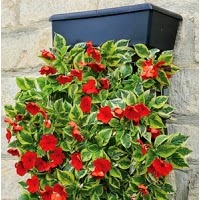
  The right planter, soil, flowers, and water will give you
 a beautiful space to enjoy.  Now, if you are looking at that picture above and thinking, "How?", but the answer is simple. 2 words, wall planters. They attach right to your vertical surface, you fill with your choice of flower and a good soil. Don't stick to just flowers though, mix it up with herbs and vines for a mix of color and greenery. It really is as simple as it looks. You can redesign an entire space in one afternoon with ease.


VertiGarden Full of Life
Empty VertiGarden


Have you seen mailbox posts or porch pillars full of life? Yes, you can do that as well. Garden-Aire HugIt helps you with a tight fighting smart strap that hugs it right to any pole, tree, or post. It also has a 3 gallon capacity, so you grow flowers, herbs, and foliage.


What if you want a full wall of flowers and vines? Besides the Wall Garden that we showed above, we have a number of pocket planter systems that are easy to attach together and to your wall. WallPots are all new to the living wall scene. Lightweight yet durable, they make a great start to any living wall.


Wait a minute? You wish you could have a living wall inside? Our friends at Woolly Pocket have made a pocket planter out of recycled bottles. It is leak proof and perfect for indoors with a great airflow system that not only allows the air to circulate, but keeps the moisture inside your planter, not leaking water out of it or drowning your plants. Woolly Pocket comes with the options of 1,3, or 5 pockets to make your project a snap.


All of these vertical gardens look beautiful and might even look hard to do, but truly all they consist of is quality wall planters, good soil, beautiful flowers, and water put into a pocket. You can do that! It doesn't get much simpler! Let your imagination soar! Visit us at www.verticalgardeningsystems.com to get started. Everything you need to do the things shown here are available there and so much more.

Tuesday, March 17, 2015

What is a Polanter?


The Polanter is a new vertical gardening system that was designed to replace the old hanging basket system. It is manufactured in New Zealand using precision injection molding and made of UV stabilized plastic that will not fade and is brittle resistant. The material is polyprolene which is indestructible and frost proof so you can use the Polanter all year round, even for winter bedding plants. The Polanter is 21 inches long and 5 inches in diameter and is offered in a variety of colors: dark green, terracotta, black, white, and lilac. With 12 carefully positioned holes, you can plant a variety of plants, including bedding plants, vegetables, salad, fruit, cacti, heathers, alpines, tomatoes, strawberries, herbs, flowers, etc.

 Mounting Options
 There are four different options to hang the Polanter--vertically fixed, vertically hanging, horizontally on a windowsill, or horizontally fixed. Vertically fixed will look great on the side of doorways or on a backyard privacy fence. Horizontally on a windowsill can take the place of missing window boxes to brighten up windows. Vertically hanging would be perfect for a front or back porch.


 How to Mount Polanter 
After receiving the Polanter, the first step is to decide where the Polanter is going to be placed and which mounting option would work best in that location. Using the fixing template on the corner of the Polanter packaging, using a felt tip pen mark on the wall the location of the brackets. For multiple Polanters linked together, the two supplied mounting brackets will need to be pushed up into the locked position in the keyholes and then use the felt tip pen to mark the location of the brackets. Drill holes for the screws on the locations marked on the wall. For concrete masonry, brick, or fibro-cement claddings, insert the four wall plugs in the drilled holes. To fix the mounting brackets, use the included screws and a flat headed screwdriver to screw the two included mounting brackets into the wall. To ensure the position is correct, slot the Polanter onto the mounting brackets. Once definite of the position, insert the matching colored screw covers to cover up screws. Remove Polanter from brackets to insert watering system.
*Note: When hanging horizontally, the 4 holes facing the ground will need to be covered with the four included plant hole covers to ensure that soil and water do not leak out. Also the included end cap lid will need to be placed on the opposite end of the hose connector base. When hanging by the included strap, simply insert the strap fasteners into the eyelets at the top of the Polanter and hang where desired.


 Assembling Integrated Watering System 
The integrated watering system includes four parts--one plain calibrated hose, one porous soaker hose made of recycled car tires, one straight connector, and an end stop.The calibrated hose end needs to be placed for a few seconds into a few inches of hot water to soften it. The softened end needs to be pushed halfway down the straight connector. This will be a tight fit to allow water to pass through with no leaks. One end of the porous soaker hose needs to be placed in the hot water to soften the end. The softened end of the porous soaker hose needs to be pushed onto the remaining end of the straight connector until both the calibrated hose and soaker hose meet in the middle.The other end of the porous soaker hose needs to be warmed for softening and then slide the end stop on the remaining end. The complete connected hose should be in the following order: the calibrated hose, the straight connector, the soaker hose, and then the end stop. Before attaching the watering system to the Polanter, the included O ring needs to be slid onto the universal hose connector on the end cap.

 To attach the integrated watering system to the Polanter tube the calibrated hose unattached end needs to be warmed in hot water. Then the warmed end needs to be pushed onto the stem pipe in the end cap in the Polanter tube as far as it will go. The watering system needs to be threaded through the Polanter tube. The Polanter tube cutout needs to match the end cap cutout. Once the end cap is securely on the Polanter tube, take two locking pips and pop them into the two opposite holes located on the end cap. This fastens the end cap to the Polanter tube. The hose clip needs to be popped into the hole at the back of the Polanter tube at the opposite end of the base end. Then place the watering system into the clip. This holds the pipe against the back of the tube.

 How to Plant your Polanter
1. Place two handfuls of gravel on the bottom of the Polanter tube to help with drainage.
2. Scoop two trowel fulls of compost into the Polanter until the soil reaches the first hole.
3. Soak the soil end of the plant in water for a few seconds. This helps with molding the soil and roots into a cylindrical shape.
4. After molded, from outside of tube place the plant in the bottom hole. From inside of tube, feed       the soil end of the plant through to your other hand. 
5. Repeat the process on the opposite side of the Polanter tube.
6. Add more compost until the bottom of the next hole and firm down.
7. Continue steps 2 through 6 until all holes are filled with plants.
8. When done planting the Polanter is ready to hang on the fixed mounting brackets or by the strap.
9. Newly planted plants need to be watered.


Using Integrated Watering System 
To water your plants, a garden hose will need to be connected to the universal hose connected on the end cap. Water needs to be turned on. The water seeps out of the porous hose. When the water starts to drip out of the base, turn off the water and unplug the hose. Depending of how many Polanter tubes that are linked together, the watering process should take around 60 to 90 seconds. Water ends up not pouring all over the gardener or the floor. Plants are watered from the inside out as nature intended. All plants are watered equally which means they grow and flower equally. If the Polanter is vertically fixed, you also have the option of watering from the top of the Polanter tube.

 Commentary
 Using the Polanter I have noticed that you do not have to pull as many weeds. Also since it is above ground, pests are few and far between. My grandmother who had recent shoulder surgery has a Polanter. She loves that she does not have to reach high above her head to water like she used to do with her hanging baskets. However she does have to keep the water hose near her front porch so she can use the watering system. If you decide to hang the Polanter horizontally, you do lose 4 planting holes on the bottom. If you vertically hang the Polanter, you do gain an additional planting hole in the top for a total of 13 planting holes. I have seen where people have bought multiple Polanters of different colors and mixed and matched to personalize them. I really liked black and lilac together.

Order yours today at Vertical Gardening Systems.

Monday, December 29, 2014

Calming Lavender


Lavender is loved and renowned for it's calming properties.This beautiful purple herb is easily grown in containers. When starting your own vertical or container garden, why not add Lavender to the mix?

Lavender not only helps calm and sooth your senses, it also keeps insects at bay. Pluck a few Lavender flowers, crush, and rub along your arms and legs while sitting outside for a natural insect repellant. You will have to watch for bees though, as they actually love the scent of Lavender as much as we do. To make an insect repellent spray, mix Lavender flowers and white vinegar in a spray bottle. Allow to sit and infuse for 2 weeks, shaking daily. Applying the mixture to places where you have already been bitten can also soothe the itch and irritation. 


One of my favorite uses for Lavender is adding it to a sachet and sewing into a loved doll or stuffed animal. The calming herb does wonders to gently soothe a child and help them drift of peacefully to sleep. These sachets are also great to add to drawers, closets, or just to keep nearby for any time that you need a moment to relax. Get creative in how you use them.
I like to plant my Lavender near my entryways and windows so I can always enjoy a calming moment before I walk in the door, or before I leave out into this hectic world. I use Nancy Jane stacking planters to mix my Lavender with other herbs like Mint, Parsley, or Cilantro. I also use a Woolly Pocket for stand alone Lavender in my vertical garden designs.
You can find both of these planters and so many more on our website,

What do you love to use Lavender for? 


Tuesday, December 23, 2014

Sage~ "The Healthiest Herb"


Sage is known as the herb of the wise. It's name is derived from the Latin Salvare which roughly translates as "to rescue" or "to heal". Traditionally is it believed that those who ate Sage became immortal in wisdom and life. In modern times, we still recognize how wonderful Sage is and although it won't make us live forever, it will improve the life we have been given. Leaves are used fresh or dried to flavor wonderful food dishes as well as work against bacterias that cause digestive issues, food poisoning, and more.


Sage is a very hardy plant that is able to withstand harsher climates with the proper care. Sage is a clumping herb that thrives with full sun and moderate watering without an overly moist soil. It makes the perfect container plant, alone or as greenery to flowers. As soon as the leaves have grown large enough to serve your needs, you can start harvesting them. Sage is also rated as one of the world's healthiest foods and is not a commonly allergic food.


Sage is a great anti-oxidant, anti-septic, and anti-inflammatory, as well as so many other things. It has been used in a tea or oil form as a remedy for respiratory infections, congestion, cough, and sore throat, packing a big punch in a little plant for cold season.  needs. Sage is also used externally to treat sprains, bleeding, and swelling. It works wonders as a muscle relaxer because of the anti-spasmodic properties that reduces tension in smooth muscles. It is thanks to this property that it is also a great alternative to use for dizziness, nervousness, and excitability.


Sage is also used to treat or help in these common ailments:
  • Clean ulcers or sores
  • Kidney troubles
  • Hemorrhage from lungs or stomach
  • Joint pain
  • Night sweats
  • Nervous headache
  • Lack of appetite
  • Mouthwash
  • Liver complaints
  • Insect stings and bites
  • Excessive, scanty, or irregular periods
  • Hot flashes
  • Oral inflammation
  • Improvement in memory
*Sage should not be used internally by pregnant or nursing woman for more than just food seasoning. Medicinal doses can cause a reduction of breast milk in nursing mothers. In pregnant women, it can cause uterine spasms. To add flavor to your dish should not cause these side effects.*


Since Sage is such a simple to grow herb and so very useful, I like to keep plenty around. I am not a fan of digging big gardens myself for herbs. I like to have them at a level that makes picking simple. I absolutely love wall planters. A beautiful living wall of plants and herbs brings such peace. My favorites include Grovert framed wall planters. If you have good lighting, you can have an herb garden right in your kitchen because it is designed to protect your walls.


Another wonderful option is Wallpots. 3 deep pockets encourage deep rooting and can be hung on any outdoor vertical surface. Use just 1 or group together for your own unique garden. Maybe you don't want to create a living wall because you're renting or trying to sell. A Nancy Jane Stacking Planter boasts of 9 planting cells that are self watering. You can grow a mixture of plants, herbs, and vegetables while using very little space.

Check out these planters and so many more to create your own unique vertical garden at 
www.VerticalGardeningSystems.com

Tuesday, December 16, 2014

Mint ~ Not Just For Fresh Breath! PLUS! Soup recipe!


It is widely known that mint is wonderful for providing fresh breath. Our toothpaste, gum, and breath fresheners all have the benefits of mint. My favorite ice cream is mint-chocolate chip and I also love peppermint patties, but did you know that fresh mint has many more benefits than that? 


Cold season is fast approaching, for some of us it is even already staring us in the face. Mint can help give relief if a cold does strike you and your family. The strong aroma of mint provides great relief of congestion and irritation in the nose, throat, and lungs. This means you can breathe easier when you have a common cold or even ongoing respiratory disorders, like asthma. That being said, do not overuse mint for these purposes because too much can cause irritation.


Now that shorter days are coming, some people may feel the Winter Blues. This is a very real thing, but mint can help you combat it. Mint is a natural stimulant. Sometimes, just the smell alone can kick your brain back into high gear. When you are feeling tired, anxious, sluggish, or even depressed try fresh mint or essential oils. Add some to your tea or coffee, take a deep whiff, or even dab some on your skin. You will notice a quick, refreshing recharge. 


Even though insects are not as prevalent during cooler months, they will be swarming us again before we realize it. Mint has anti-pruritic properties, which are wonderful when used to treat insect bites such as mosquitoes, wasps, hornets, and more. Mint provides a cooling sensation which will calm the itching sensation these bites cause and a natural anti-inflammatory to bring the swelling down. Mint is also a wonderful repellant for bugs because the smell is unappealing to them. The same properties that give you relief from insects will also help with acne. It will soothe pimple irritation as it helps swelling and itching go down.


Mint aids in weight loss in a natural and healthy way. Not only does it stimulate your mind, mint also stimulates your digestive enzymes that absorbs the nutrients from food and consumes fat to change into energy. This means when you add mint to your diet, you are aiding in turning fat into energy. Not only will you feel like being more active, you will burn more fat while you are active. That is a win-win to me!


Growing Mint is simple. You don't have to have a lot of space to do it in either. I love the Nancy Jane Stacking Planter. It allows you to grow many different herbs and plants all at the same time. You can have a full blown herb garden in less than a foot of space! Maybe you would like to spruce up a drab wall or railing, Wallpots are perfect for that. Attach them right to your wall and start growing!
 If you would like to start your herbs from seeds, then a Seed Sprouter is just what you need. It takes
up very little room and you can keep an eye on those precious seedlings.
 
If you plan to use fresh walnuts that you gather yourself, then we would like to help you gather and crack them. Use a Nut Wizard to roll right over them, even in grass, so you don't have to bend over to gather them. We also carry a nice selection of quality Walnut Crackers so you can put that hammer down! 

All of these items and so much more are available on our websites. 


Monday, December 8, 2014

Cilantro: Natural Healer


Did you know that some of those herbs you have planted are wonderful for more than just great flavoring in your favorite dishes? I love finding natural alternatives to use in place of some medicines and over a few blog posts, I want to share various ones with you. Today I will share about Cilantro. It is one of my favorites and I use it often. I especially love a fresh homemade salsa with Cilantro added.


Cilantro, also known as Coriander, is a wonderful cool weather herb. It thrives in a cool, moist garden, while it doesn't linger around in hot weather. You may recognize Cilantro from the unique flavor the leaves give when added into your favorite Mexican or Thai dishes. Cilantro seeds are also known as Coriander, which is a prime ingredient in Indian curries. It is noted to be one of the oldest spices in the world, dating back to 5,000 BC. Aside from a wonderful and refreshing flavor, Cilantro is a powerful digestive aid. Its cleansing properties are capable of removing heavy metals as well as other toxins from your body. Cilantro is also known to be a strong antioxidant, good source of calcium, and increase levels of HDL while lowering LDL. It has anti-inflammatory, anti-fungal, antibacterial, anti-nausea, and antimicrobial properties. There are many more benefits to this little herb. I highly suggest adding it to your garden or herb box if you haven't already. Here is a simple recipe to use Cilantro. I am using the one from RealSimple.com that I enjoy. Eat this pesto on toast, in pasta dishes, and more for a refreshing flavor.


When I am growing my own herbs, I like to start seeds in a Sprouter. It helps me keep an eye on their growth and progress. I like to use the Victorio Seed Sprouter because it comes with 4 trays, so I can grow different types of seeds at one time. When they are ready, transplanting into a container is simple when you just remove them from the sprouter and into your rich soil. 
My favorite planter is Nancy Jane Stacking Self Watering Planter. This is a little planter that acts like you have plenty of space. 3 stacking planters offer 9 unique spaces to plant in. You can plant a wide variety of flowers, herbs, and vegetables all in the same planter, yet you don't have to have a lot of room.
To chop my ingredients for Pesto before adding them to the processor, I use a Food Chopper so I can get a smoother consistency without having to run the processor as long. If the Cilantro gets too heated, it can start losing the beneficial properties. 

You can find these items and more on our websites:


Friday, November 14, 2014

Cool Weather Herbs and Rata-stoup-ie


I love to have fresh herbs on hand for all of the wonderful soups that come with cool weather. There is nothing quite like sitting around the table with loved ones to share a hearty and filling meal, unless you know that most of those ingredients came straight from your own bountiful garden. Seeing others enjoy the fruits of my labor always puts a smile on my face that is usually accompanied with a deep, content sigh.


You don't need much room to plant a little herb garden. Even if you are limited on space, you can still have fresh herbs. A few that do really well in mild cold weather months are Parsley, Cilantro, Mint, Sage, Rosemary, Thyme, Chives, and even Lavender. Fall is the perfect time of year to plant them since they are hardy and will grow quickly. Even better than that, you can plant them all together in the same container, or use beautiful green parsley and cilantro to spruce up existing flower gardens that are brimming with beautiful Winter flowers.


Now To Use Them!

I came across a wonderful Rata-Stoup-Ie recipe from Rachael Ray that is just delightful. It will use some of those fresh herbs you have lovingly planted and a few other garden fresh vegetables that you can also grow in small spaces. I hope you love this hearty soup as much as my family does!

Rata-stoup-ie

Ingredients:

  • ¼ cup Olive Oil
  • 4 cloves garlic, thinly sliced
  • 1 lb potatoes quartered (ANY variety works, but I prefer small red potatoes)
  • 1 eggplant, chopped, skin on
  • 1 zucchini chopped, skin on
  • 1 large onion, thinly sliced
  • 4 sprigs fresh Thyme
  • 2 sprigs fresh Rosemary
  • 4-5 leaves fresh Sage, thinly sliced
  • 30oz tomato sauce
  • 1qt chicken both
  • Parsley, generous handful
  • Salt & Pepper to taste
  • Bread of choice 
Preparation:
  1. In a large soup or stock pot heat your olive oil and tilt pot around to cover the bottom and then add garlic over medium heat.
  2. Add potatoes, eggplant, zucchini, and onion. Cook over medium-high heat for 5 min.
  3. Add Thyme, Rosemary, and Sage, then season with salt and pepper.
  4. Stir in tomato sauce and chicken broth, stirring thoroughly. Cover an cook over medium heat for 15 minutes; stir occasionally.
  5. Remove from heat. Discard Thyme and Rosemary stems (leaves remain in soup and will have fallen off. You can omit this step but plucking the leaves before adding.) Stir in Parsley.
  6. Serve with bread and enjoy!


I use vegetables from my garden and even make my own tomato sauce. For this particular recipe, you can use everything straight from your own garden except for the chicken stock of course. I like to make my own chicken stock when I boil chicken for other things and then I flavor the leftover water and can or even freeze it for later. While preparing everything, I like to have a little kitchen help. Here are the gadgets that help me prepare soups like this. You can find ALL of these wonderful helpers on our website www.lawn-gardening-tools.com or you can click right on the name to take you straight to the product. 

I have a special chopping board with knife that makes chopping all of these vegetables a breeze. One board, one knife, simple clean up and storage. I love my EZ Cutting Board. For smaller tasks, I sometimes use my Food Chopper. Either will work just as well and save you time.  For fresh tomato sauces, juice, stock, etc I use a Tomato Press.  I love to gather my garden fresh tomatoes and spend a day making puree, stocks, sauces, and marinara, then I freeze them so I can pull them out all during the year to enjoy. If you would like to can your tomatoes or make your own chicken broth, I highly recommend our Multi-Use Canner. It even has a built in thermometer. How neat is that?!


We even have you covered when you are ready to plant. Check us out at www.verticalgardeningsystems for a wide variety of container planters.